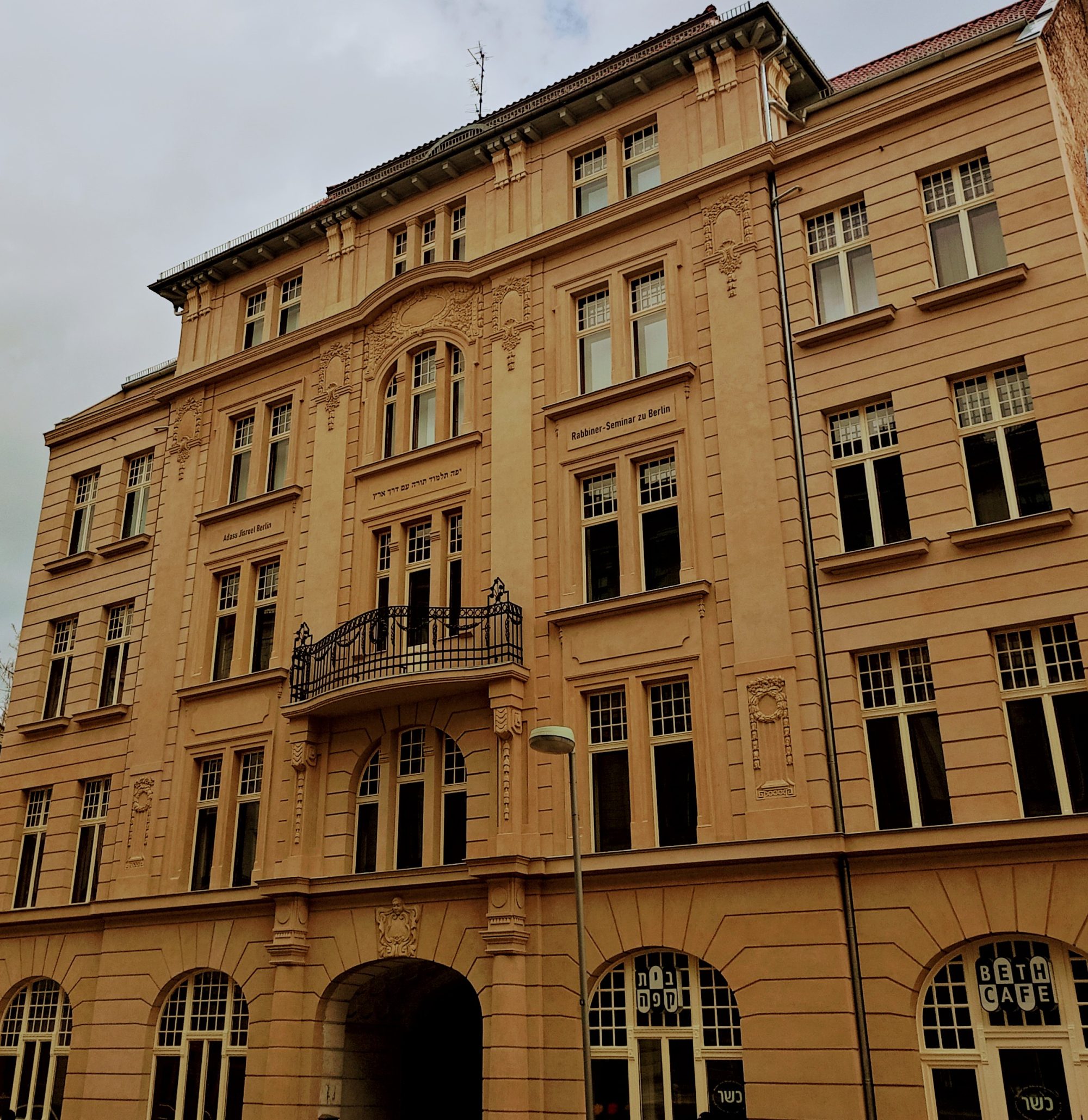

We stand on the threshold of Rosh Hashanah, at an existential turning point. The Jewish year 5786 is drawing to a close, and the double Parasha Nitzavim-Vayeilech confronts us with the central questions of our identity: Who are we as individuals before G’d, and what is it that holds us together as a community?
Two of the most important Jewish thinkers of Western Europe, both of particular significance to the history and spiritual heritage of Orthodox Judaism and our Adass Jisroel in Berlin, can offer us an important perspective: the Gaon Rabbi Prof. Dr David Zvi Hoffmann זצ”ל, the “Torah prodigy of Berlin”, known as בעל הפירוש על התורה, and the Gaon Rabbi Dr Jechiel Jaakov Weinberg זצ”ל, whose intellectual work became a light for the rebuilding of European Orthodoxy after the destruction of European Jewry, known as בעל שרידי אש.
The portion of Nitzavim begins with an exceptionally powerful description:
אַתֶּם נִצָּבִים הַיּוֹם כֻּלְּכֶם לִפְנֵי ה׳ אֱלֹהֵיכֶם רָאשֵׁיכֶם שִׁבְטֵיכֶם זִקְנֵיכֶם וְשֹׁטְרֵיכֶם כֹּל אִישׁ יִשְׂרָאֵל.
“You are standing today, all of you, before the Eternal, your G’d: your heads, your tribes, your elders and your officials, every man of Israel.” (Devarim 29:9)
In his commentary on Devarim, Rabbi Hoffmann emphasises that this scene reaches far beyond the immediate moment. The covenant is not made only with one generation, but connects it with all future generations. The word נִצָּבִים – “you are standing” – does not simply describe passive presence, but a firm and conscious stance. This standing together contains a fundamental idea of collective Jewish responsibility. Arevut.
Especially in the Diaspora, this inner stance becomes a condition of survival. When political circumstances grow darker or even break down, it is this standing together, this visible willingness to stand up for one another, that holds a community together. From the scholar to the ordinary member of the community, everyone bears responsibility for the fate of the entire Jewish people.
Another verse of the portion continues this thought:
הַנִּסְתָּרֹת לַה׳ אֱלֹהֵינוּ וְהַנִּגְלֹת לָנוּ וּלְבָנֵינוּ עַד עוֹלָם לַעֲשׂוֹת אֶת כָּל דִּבְרֵי הַתּוֹרָה הַזֹּאת.
“The hidden things belong to the Eternal, our G’d; but the revealed things belong to us and to our children for ever, that we may fulfil all the words of this Torah.” (Devarim 29:28)
Here Rabbi Weinberg offers a different, yet closely connected, perspective. For a man who had himself experienced the catastrophe of European Jewry and later worked in Switzerland to rebuild European Orthodoxy, the distinction between the hidden and the revealed acquires a particular ethical significance.
The hidden – the mysteries of the world, the suffering of the righteous, the question of Divine providence – lies beyond human understanding. Our task, however, lies in what is revealed before us: in the suffering of another person, in his material and spiritual needs,
and in the question of what we can actually do. Especially in times of crisis, this means practical responsibility, social security and human solidarity.
The Torah then leads us to another central thought:
כִּי הַמִּצְוָה הַזֹּאת אֲשֶׁר אָנֹכִי מְצַוְּךָ הַיּוֹם לֹא נִפְלֵאת הִיא מִמְּךָ וְלֹא רְחֹקָה הִיא. […] כִּי קָרוֹב אֵלֶיךָ הַדָּבָר מְאֹד בְּפִיךָ וּבִלְבָבְךָ לַעֲשֹׂתוֹ.
“For this commandment which I command you today is not too difficult for you, nor is it far away. […] Rather, the word is very near to you, in your mouth and in your heart, to do it.” (Devarim 30:11,14)
In his so special linguistic analysis, Rabbi Hoffmann draws attention to the goal expressed in the verse: לַעֲשֹׂתוֹ – “to do it”. This is not about spiritual acrobatics or about seeking something unattainable. Torah is meant to become real in human life.
Teshuvah is not a utopia. No one should say, “I am not religious enough”, “our times are too modern”, or “a truly Jewish life is no longer possible in the Diaspora”. The Torah is near. It can be integrated into our daily lives. Every mitzvah, every kind word and every ethical decision in our social, professional or communal lives can be a step in that direction.
Vayeilech finally brings us to another decisive moment: Moshe Rabeinu hands over the leadership to Yehoshua. Moshe goes – וַיֵּלֶךְ – and leaves no power vacuum. He leaves the Torah and the command of Hakhel- Gather the people!:
הַקְהֵל אֶת הָעָם הָאֲנָשִׁים וְהַנָּשִׁים וְהַטַּף וְגֵרְךָ אֲשֶׁר בִּשְׁעָרֶיךָ לְמַעַן יִשְׁמְעוּ וּלְמַעַן יִלְמְדוּ וְיָרְאוּ אֶת ה׳ אֱלֹהֵיכֶם וְשָׁמְרוּ לַעֲשׂוֹת אֶת כָּל דִּבְרֵי הַתּוֹרָה הַזֹּאת.
“Gather the people, the men, the women and the children, and the stranger who is within your gates, so that they may hear and so that they may learn, and fear the Eternal, your G’d, and observe to do all the words of this Torah.” (Devarim 31:12)
Here too, a common idea can be discerned in the approaches of both scholars: Hakhel is an answer to alienation and to the idea that Torah knowledge belongs only to a small elite. Rabbi Hoffmann stresses the importance of a Torah that is accessible to all. For Rabbi Weinberg, connecting the generations through Jewish education is an essential condition for the future of Judaism. When young and old come together to hear and learn Torah, transmission becomes something living.
On the Eve of the New Year 5787
When the shofar sounds in a few days, the Jewish people, every Jewish woman and every Jewish man, will stand before the Judge of the world. We do not do so as isolated atoms, but as links in an unbroken chain.
In the spirit of Rabbi Hoffmann, this means strengthening the awareness that fulfilling the commandments of the Torah is attainable and can be experienced – precisely here, in the reality in which we live today. And from Rabbi Weinberg we learn that our responsibility begins where the revealed lies: in protecting and strengthening our Jewish community.
May the coming year 5787 be a year of unity, health and peace for the entire House of Israel.